 Français (France)
  Finnish (FI)
  English (United Kingdom)




A consistent system: overview of the pillars of the PM²
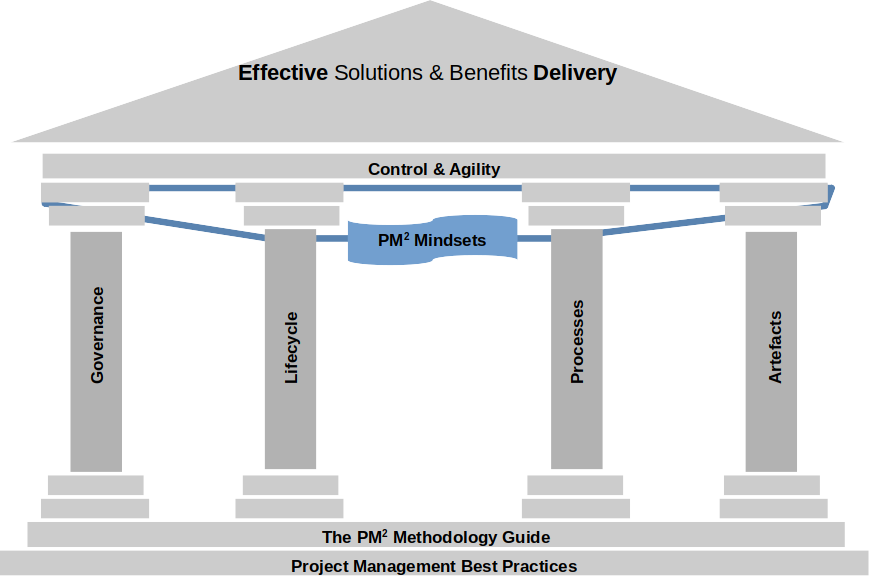
Over the past months we've walked through PM²'s pillars one at a time: the governance model, the project lifecycle, the processes, the artefacts, and finally the necessary glue holding the house together: the mindsets. Each has its own purpose. But in a project, e.g. an EU-funded one, their real value emerges when they work together — and this is a good moment to tie the threads together before PM² Finland's first community meetup on 25 August 2026.
Two examples of how the pillars interlock
Governance + artefacts = audit trail
The governance model (pillar 1) defines who decides what, and at which level — Steering Committee, Project Owner, Project Manager. Artefacts (pillar 4) are the documents supporting project management: e.g. the Business Case, the Project Charter, the Project Handbook. Without artefacts, governance is just a chart on a wall. Without governance, artefacts are disconnected forms. Together they form the audit trail that funding authorities and the EU funder expect at project closure.
Lifecycle + processes = controlled change
The lifecycle (pillar 2) defines the project phases. Processes (pillar 3) describe what actually happens within each phase, such as handling a change request through 'Monitor & Control' process. When a funder asks why the project's scope changed mid-term, you can provide a traceable process anchored to the right lifecycle phase.
Mindsets are the glue holding everything together — without open communication, continuous attention to quality and value, and a proactive attitude, governance, lifecycle, processes and artefacts easily become administrative obligations.
Join the discussion in the PM² Finland LinkedIn group.